
Sabrina Carpenter
Can she be "Man's Best Friend" and a Girl's Girl?

Last week Sabrina Carpenter released her single, Manchild, just ahead of her Primavera Sound headliner set. This was the pop girlies’ Punxsatawny Phil at Gobbler’s Knob moment. The verdict: Winter is over! Summer has officially arrived, baby!
Quickly following the single was the release of the Manchild music video. If you haven’t seen it yet, here you go:
This video lit up my group chats. First of all, wtf was the budget? Our best guess landed somewhere between $10–15 million (a figure that outpaces last year’s indie features Anora and The Brutalist, by the way). Note: Days later, the author will learn that the budget was closer to $2 million lmao. The video follows Sabrina hitchhiking through a sun-bleached desert, thumbing rides from a parade of dubious men. One by one, they pick her up, and one by one, she leaves them worse than she found them. In the final shot, she crosses the road and hitches a ride back in the direction she came. The message is clear: for Sabrina, it’s not about the destination, it’s the spectacle of the ride.
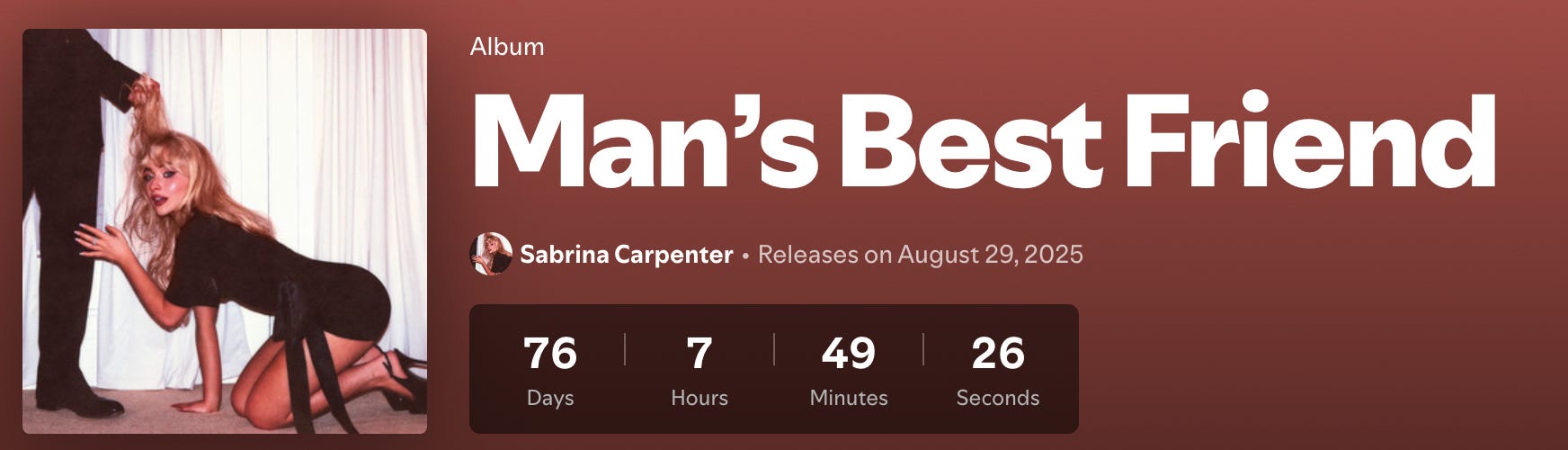
Ultimately, the release of the Manchild single and music video served as the lead-up to the announcement of Sabrina’s next studio album, Man’s Best Friend. Buckle up for the album artwork:
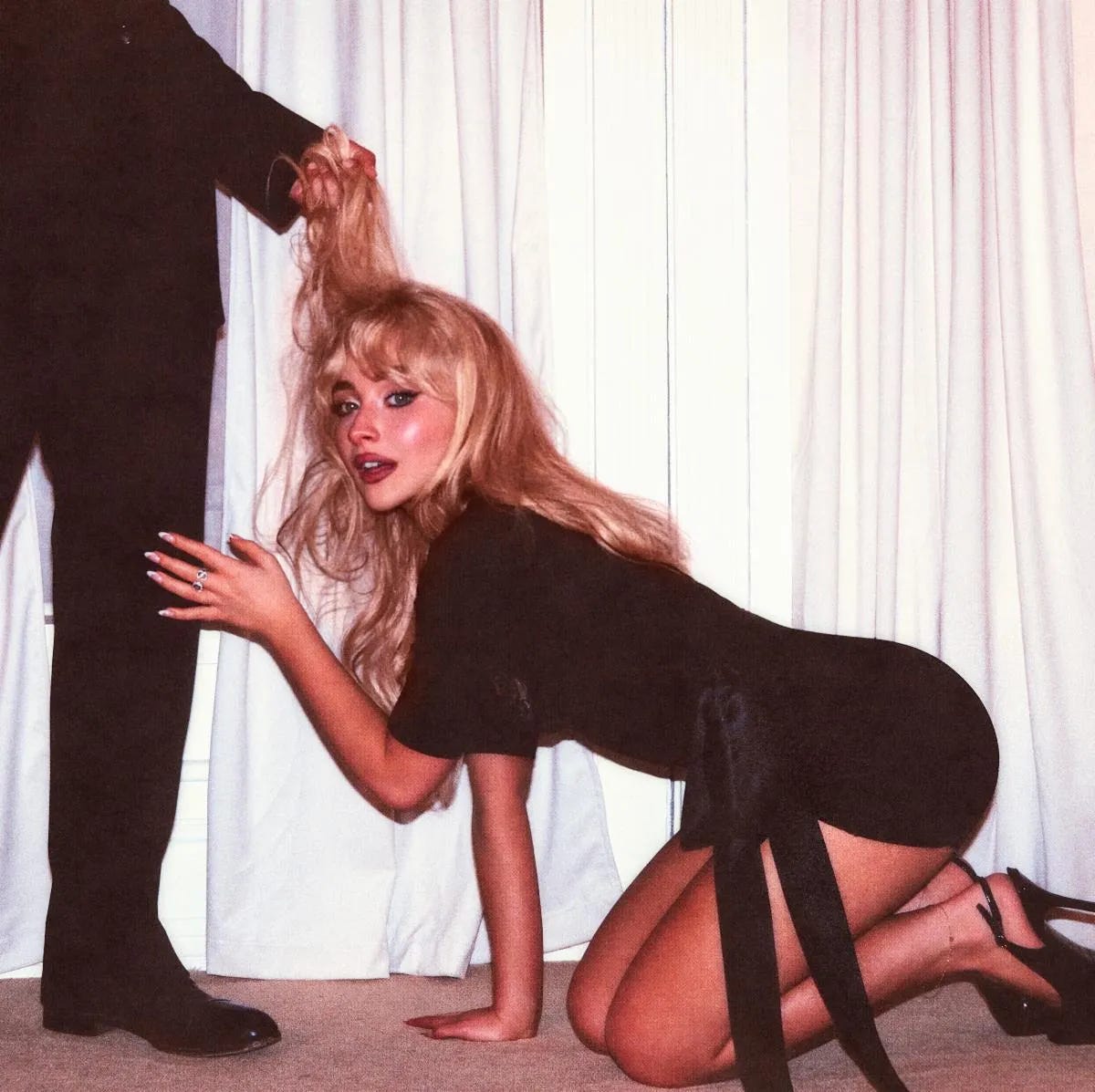
The sleeping beast of the internet woke with a shudder whose reverberations absolutely annihilated my TikTok algorithm. Interestingly enough, the most vocally offended seem to be a large part of her fanbase: young progressive women.
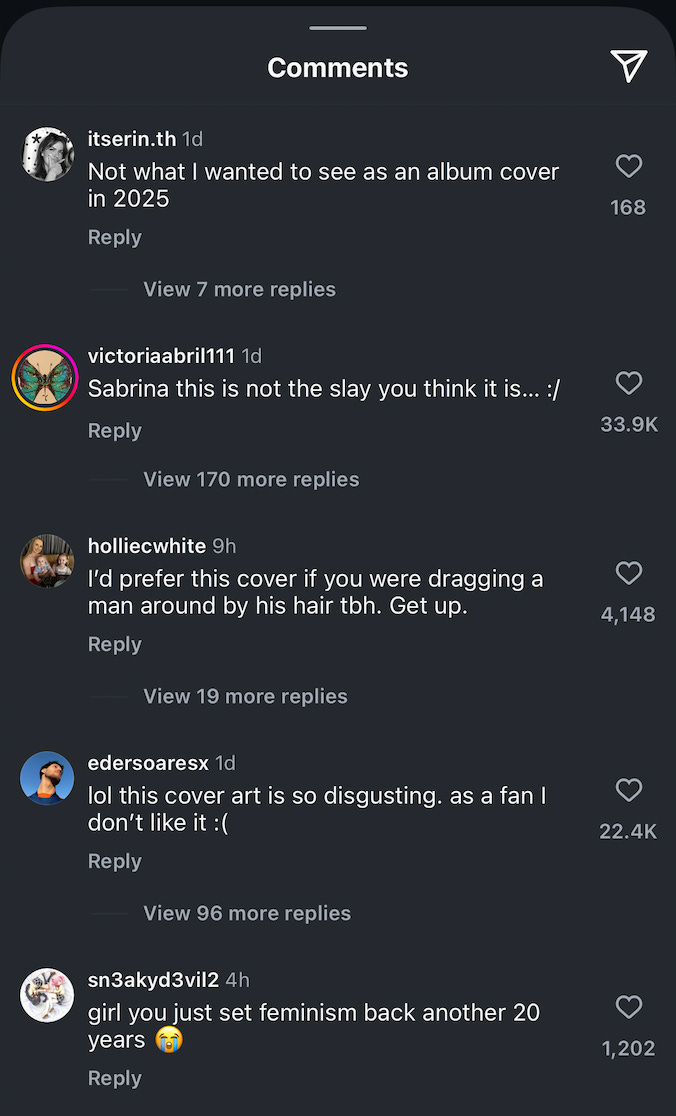
The primary critique of the album cover was threefold: it was seen as promoting violence against women, centering men, and lacking any nuance or meaningful interrogation of gender roles and dynamics.
I’ll say outright that I disagree with this take, but I find it of exceeding interest as well. In fact, I think the vitriolic response toward the image makes it much more interesting and powerful.
Women who wield their sexuality as a source of power often walk a razor’s edge between being perceived as empowering or degrading women on the whole. The distinction lies not in their intent, but in the gaze of the observer—the voyeur—whose judgment governs the narrative. The voyeur resents being made to feel exposed or ridiculed, a reaction often triggered by the subject’s unapologetic confidence and lack of shame.
I found myself reflecting on the reception of Man’s Best Friend and the film Babygirl. The key distinction lies in the portrayal of the subject: in Babygirl, the protagonist experiences profound shame in her desire to be treated like a dog for sexual gratification. That shame serves a specific narrative function: it grants the voyeur permission to judge. All parties operate within a framework of agreed upon humiliation, allowing the audience to maintain moral distance under the guise of superiority. Sabrina’s cover, by contrast, places the voyeur on their hands and knees beside her, complicit in the scene.
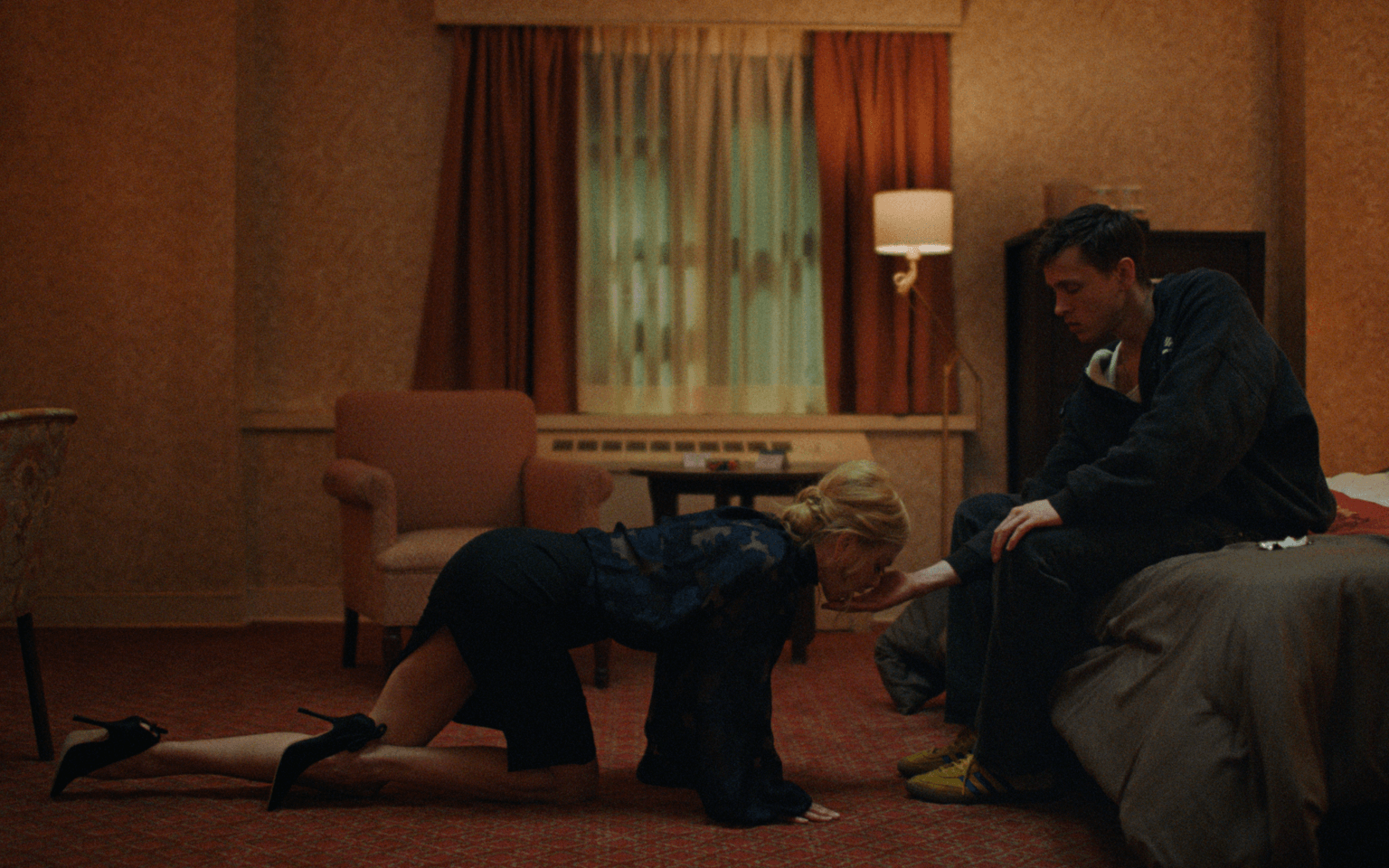
Another deep divide between the album cover Man’s Best Friend and the film Babygirl is that the former is a single image lacking the context of the music it represents. This is an interesting tool deployed by Sabrina and her team to create an active frenzy of bad faith debates that feed on a lack of media literacy and moral panic to drum up organic buzz for an album that is due to be released a mere one day before the 2026 Grammy nomination window closes.

What we do have is the leading single, Manchild, as our only context clue for the new album. With its synth pop bounce, plucky twang, and biting lyrics, Manchild reinforces Sabrina’s commitment to the Short n’ Sweet sound that earned her a Grammy for Best Pop Vocal Album in 2025. My immediate reaction was that Manchild feels like a call-and-response to Please Please Please—both lyrically and sonically. Sabrina outlines the bait and switch game she likes to play with her food, I mean men.
Please Please Please
I know I have good judgment, I know I have good taste
It's funny and it's ironic that only I feel that way
Manchild
Oh, I like my boys playing hard to get
And I like my men all incompetent
And I swear they choose me, I'm not choosing them
Amen, hey, men
Please Please Please
If you wanna go and be stupid
Don't do it in front of me
If you don't wanna cry to my music
Don't make me hate you prolifically
Sabrina’s plead to not be hurt in Please Please Please takes on a sardonic edge when coupled with her acknowledgment in Manchild that her type includes the dumb but hot subset. She swears they chase her, but the verse ends in a beckoning, “hey, men”. She’s happy to load the chamber then let these men shoot themselves in the foot. It makes for great writing material, after all.
Manchild functions both as a continuation of Sabrina Carpenter’s established artistic voice and as a subversive addendum that reframes the narrative of her earlier work. It reveals a more complex psychological undercurrent— one that calls into question just how “sweet” her persona truly is. At the same time, it flips the script on gender dynamics, casting men as the objectified sex in a world that now plays by her rules.
Many critics of the Man’s Best Friend cover art have accused it of frivolously “centering men” for the sake of male validation and at the expense of feminism. This is a clever tactic for avoiding the optics of slut-shaming, instead reframing the critique as a moral imperative: that (hetero)sexuality must serve only as a tool to “dismantle the patriarchy.” What ultimately emerges is not just discomfort with the image itself but a deeper cultural unease with heterosexual desire as a site of both power and pleasure.
Sabrina’s ability to polarize her fanbase with a single image is another notch in her popstar bedpost that confirms her status among the greats. If there’s one thing that seems certain it’s that her career will be anything but short and sweet.


This read has me on my hands and knees complicit at the scene of the crime 🐶
You slayed with this